Apr 22, 2026
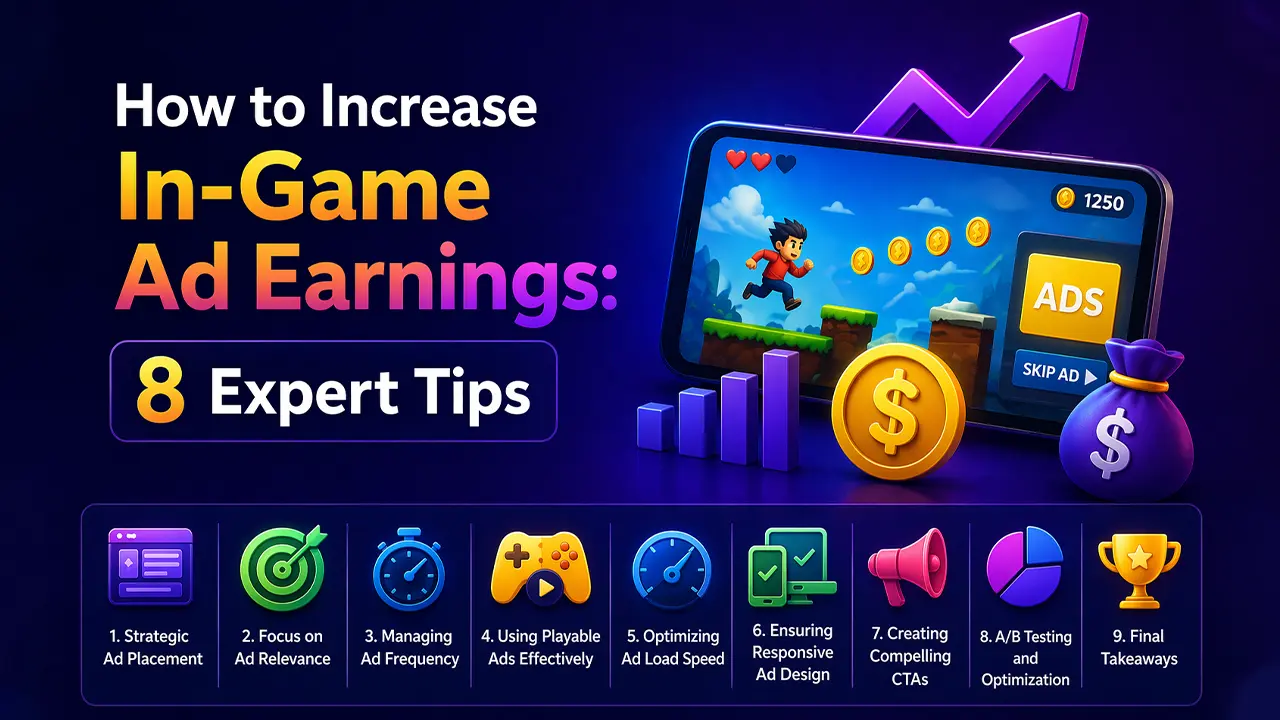
How to Increase In-Game Ad Earnings: 8 Expert Tips
Are you managing a gaming portal or platform and looking to increase your revenue through in-game ads ? Want to improve ad performance, boost clicks, and maximize earnings ?
You’re in the right place. In the world of casual web games, how you place and present ads can make a huge difference. Done right, in-game ads can significantly increase revenue without hurting the player experience.
As the digital landscape becomes more competitive, simply showing ads isn’t enough—you need to optimize them for better engagement and higher click-through rates (CTR). In this guide, we’ll explore practical, real-world strategies to improve your in-game ads. From smart ad placement to using interactive formats, you’ll learn how to capture players’ attention, increase engagement, and boost your platform’s revenue—all while keeping the gameplay experience smooth and enjoyable.
To improve clicks on your in-game ads—and ultimately increase your revenue—there are several best practices you can follow. The tips outlined below are practical and proven. When applied consistently over time, they can make a noticeable difference in your overall earnings.
If you’re looking to go even deeper, we also have a dedicated article that explores the most profitable ways to display in-game ads, including the psychology behind effective ad placement and user behavior.
Table of Contents:
Strategic Ad Placement
Focus on Ad Relevance
Managing Ad Frequency
Using Playable Ads Effectively
Optimizing Ad Load Speed
Ensuring Responsive Ad Design
Creating Compelling CTAs
A/B Testing and Optimization
Final Takeaways
1. Strategic Ad Placement
Placing ads in the right spots is both an art and a strategy. When done correctly, it can boost player interest while also increasing your revenue. The challenge lies in capturing attention without disrupting the gameplay experience. That’s why ads should be integrated in a way that feels natural rather than forced. Choosing the right placement isn’t just about picking any visible area on the screen. It’s about understanding player behavior and positioning ads where they feel expected and unobtrusive.
When ads blend smoothly into the experience, players are far more likely to engage with them. At the same time, it’s not only about generating clicks—it’s equally important that the ads are relevant and appealing to players, ensuring a positive overall experience.
2. Focus on Ad Relevance
When it comes to improving in-game ads, precision in your strategy plays a huge role in capturing user attention. The more accurately you align ads with your audience’s interests, the more effective they become. This is where targeted advertising makes a real difference. It’s not just another tactic, it’s a key driver of engagement.
By showing players ads that match their preferences and behavior, you create a stronger connection with your audience. This naturally leads to higher click-through rates and better overall performance. The idea is simple: the better you understand your users and apply that insight to your ad strategy, the more impactful your results will be especially when it comes to engagement and revenue.
3. Managing Ad Frequency
Managing ad frequency in gaming portals is all about balance. Push too many ads, and you risk frustrating users; show too few, and you miss revenue opportunities. Overloading players with ads often leads to disengagement and ad fatigue. The goal is to maintain interest while still maximizing clicks and revenue.
To strike that balance, consider these practical approaches:
Strategic Ad Scheduling: Show ads during high-traffic moments or natural breaks in gameplay to maximize visibility without interrupting the experience.
User Segmentation: Adjust how often ads appear based on different user groups, creating a more personalized and less intrusive experience.
Feedback Mechanisms: Gather user feedback through surveys or direct channels to understand tolerance levels and fine-tune ad frequency.
Optimized Ad Content: Focus on quality and relevance—engaging ads reduce the negative impact of frequency and keep users interested.
When managed properly, ad frequency becomes a tool for growth rather than a source of frustration.
4. Using Playable Ads Effectively
You can take your ad strategy a step further by moving beyond traditional formats and introducing interactive elements. Playable ads, for example, offer a more engaging and dynamic experience for users. Instead of simply watching, users get to interact—trying out a mini version of the game directly within the ad. This naturally grabs attention and often leads to higher click-through rates, better visibility, and increased revenue.
Imagine an ad where players complete a short mission or make quick decisions, just like they would in the actual game. They might choose strategies, solve challenges, or react in real time. This kind of interaction gives users a real feel for the gameplay. In some cases, they may even earn points or rewards that carry over if they install the game.
By blending the ad experience with actual gameplay, you create a seamless and immersive interaction one that feels less like advertising and more like part of the game itself.
5. Optimizing Ad Load Speed
If you want to improve your in-game ads, speed is critical. The faster your ads load, the better the chances of user interaction. Players naturally prefer ads that appear quickly, as it keeps the overall gaming experience smooth and uninterrupted. That’s why optimizing ad loading speed should be a priority. Faster delivery not only captures attention instantly but also prevents frustration caused by delays.
When ads load seamlessly, they feel like a natural part of the experience—helping maintain engagement while improving overall performance and revenue.
6. Ensuring Responsive Ad Design
When it comes to in-game advertising, responsiveness isn’t optional, it’s essential. Ad responsiveness goes beyond visuals. It directly impacts how smoothly ads appear and function across different devices, screen sizes, and resolutions.
Think of it from a user-first perspective: when ads adapt seamlessly to any screen, players experience a clean, consistent, and visually appealing interface. This consistency builds trust and comfort, making users more likely to engage with the content. In the end, well-optimized, responsive ads don’t just look better, they perform better, leading to higher interaction and improved click-through rates.
7. Creating Compelling CTAs
A strong call to action (CTA) plays a key role in driving clicks and shaping user behavior. It’s often the difference between a user noticing an ad and actually interacting with it. Imagine an in-game ad promoting a premium feature without a clear CTA. Even if players find the offer interesting, they may not take the next step simply because there’s no clear direction.
Now compare that to a well-crafted CTA like “Unlock Now for Exclusive Rewards.” It not only grabs attention but also motivates users to act immediately. Creating effective CTAs requires understanding how users think and what drives their decisions. The goal isn’t just to inform, it’s to guide and persuade. When you use clear, action-oriented, and compelling CTAs, your in-game ads become far more impactful and engaging.
8. A/B Testing and Optimization
When it comes to improving in-game ad performance, A/B testing is one of the most powerful tools you can use. It allows you to test and refine different elements of your ads such as visuals, messaging, placements, and calls-to-action—to see what resonates best with your audience. For example, you can experiment with different ad designs, positions within the game, or reward incentives to identify the most effective combination.
Through this process, you gain valuable insights into player behavior and preferences. The data collected from A/B testing helps you make smarter, evidence-based decisions leading to better engagement, higher retention, and ultimately increased revenue.
Final Takeaways
Optimizing in-game ads for better revenue isn’t about a single tactic, it’s about combining multiple strategies thoughtfully. From smart ad placement and relevance to adding interactive elements, every detail contributes to better performance. Maintaining the right balance is equally important. Controlled ad frequency, fast loading speeds, and responsive design all help create a smooth and enjoyable experience, which naturally leads to higher engagement and click-through rates. A strong call to action plays a critical role by guiding users toward interaction, while A/B testing allows you to continuously refine and improve your approach using real data.
Together, these practices form a solid foundation for increasing ad performance while keeping the player experience positive and immersive. And remember—ads alone won’t drive success. Engaging, high-quality games are just as important. If you haven’t explored them yet, it’s worth checking out the top casual game categories with the highest engagement to strengthen your overall strategy.